Understanding how to properly reconstitute peptides is crucial for anyone involved in peptide research. Many beginners make critical errors during this process, which can compromise the integrity and efficacy of their research materials. This guide provides a straightforward, step-by-step approach to reconstituting peptides, ensuring accuracy and optimal results for your studies.
Why This Guide Exists
The most common mistake beginners make in peptide research is getting the reconstitution process wrong. Incorrect reconstitution can lead to degraded peptides, inaccurate dosing, and ultimately, flawed research outcomes. This guide is designed to simplify the process, providing clear, actionable steps to ensure your peptides are prepared correctly from the outset. We aim to demystify what can seem like a complex procedure, allowing you to focus on your research with confidence.
What You Need
Before you begin, gather the following essential items to ensure a smooth and sterile reconstitution process:
- Peptide Vial: Your lyophilised peptide, typically in a sealed glass vial.
- Bacteriostatic Water: This is critical. Bacteriostatic water contains 0.9% benzyl alcohol, which inhibits bacterial growth, extending the shelf life of your reconstituted peptide. Do NOT use sterile water, as it lacks this preservative and will significantly reduce the peptide's stability once mixed.
- Alcohol Swabs: For sterilising vial tops and injection sites.
- Insulin Syringe (U-100, 1mL): These syringes are ideal due to their fine needles and precise measurement markings, crucial for accurate dosing.
- Clean Workspace: A disinfected, organised area free from contaminants is essential to maintain sterility.
Step-by-Step Process
Follow these steps carefully to reconstitute your peptides:
- Prepare Your Workspace: Ensure your hands are clean and your workspace is disinfected. Lay out all your materials.
- Clean Vial Tops: Take an alcohol swab and thoroughly wipe the rubber stoppers of both your peptide vial and the bacteriostatic water vial. Allow them to air dry completely to prevent alcohol from entering the vials.
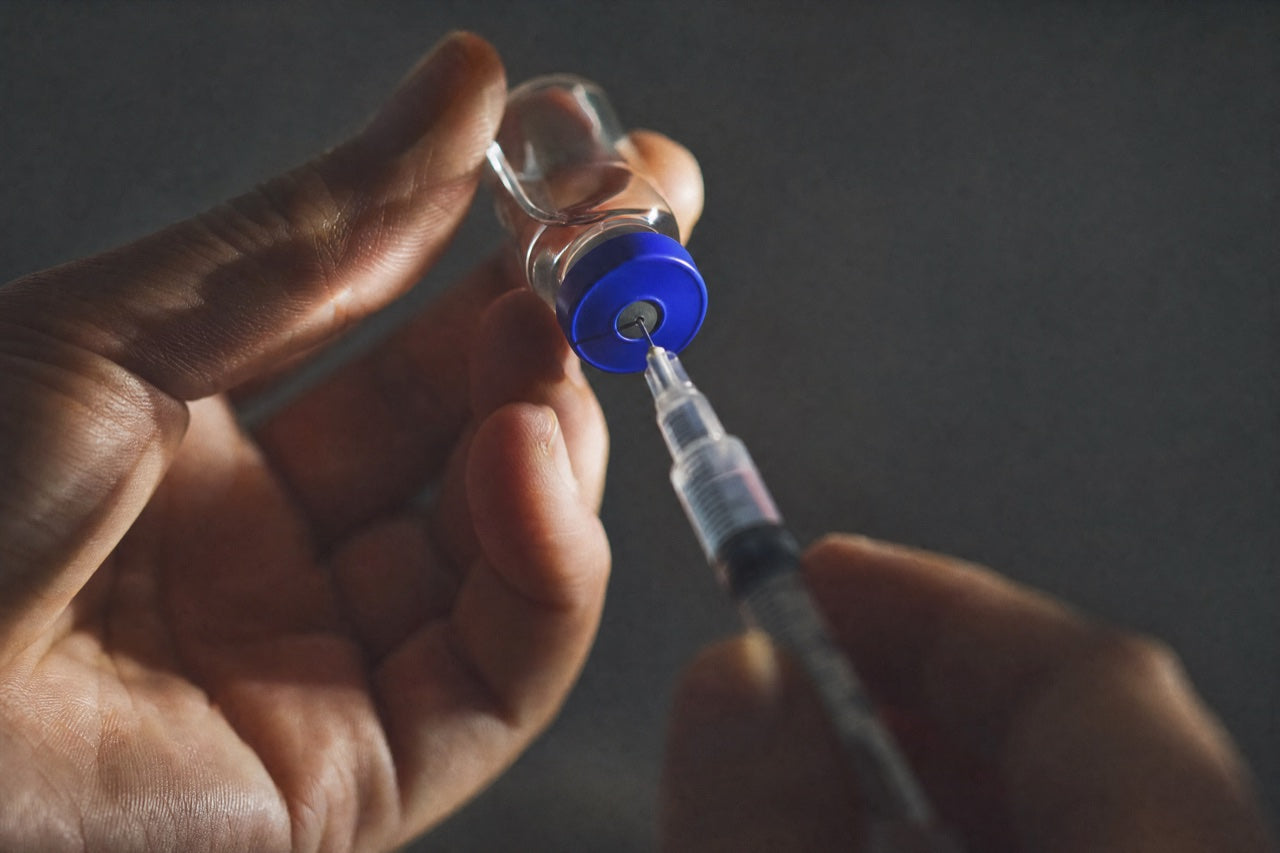
- Draw Bacteriostatic Water: Using your insulin syringe, carefully draw the desired amount of bacteriostatic water. For example, if you have a 5mg peptide vial and want a concentration of 2.5mg/mL, you would draw 2mL of water.
- Inject Water into Peptide Vial: Slowly and steadily inject the bacteriostatic water into the peptide vial. Aim the needle towards the side of the vial, allowing the water to gently run down the glass. This prevents direct forceful injection onto the lyophilised peptide, which can cause foaming and potential degradation.
- Do NOT Shake: Once the water is in, remove the syringe. Do not shake the vial. Instead, gently swirl the vial between your fingers. This encourages the peptide to dissolve without damaging its delicate structure.
- Allow to Dissolve: Place the vial in the refrigerator and allow the peptide to fully dissolve. This can take anywhere from a few minutes to several hours, depending on the peptide. Check periodically, but avoid excessive swirling.
Calculating Your Dose
Accurate dosing is paramount in peptide research. The concentration of your reconstituted peptide depends on the amount of bacteriostatic water added. Here's a simple formula and a worked example:
Formula: Peptide amount (mg) / Water volume (mL) = Concentration (mg/mL)
Once you have your concentration, you can calculate your dose. Insulin syringes are marked in "units," where 100 units typically equals 1mL. Therefore, 1 unit = 0.01mL.
Worked Example:
- Peptide Vial: 5mg
- Bacteriostatic Water Added: 2mL
- Desired Dose: 250mcg (0.25mg)
Step 1: Calculate Concentration
5mg / 2mL = 2.5mg/mL
Step 2: Calculate Volume for Desired Dose
To get 0.25mg, you need (0.25mg / 2.5mg/mL) = 0.1mL
Step 3: Convert Volume to Syringe Units
Since 1mL = 100 units, 0.1mL = 10 units on a U-100 insulin syringe.
For more complex calculations, or to double-check your work, please refer to our dedicated Reconstitution Calculator.
Storage After Reconstitution
Proper storage is vital to maintain the stability and potency of your reconstituted peptides:
- Refrigeration is Key: Always store reconstituted peptides in the refrigerator (2-8°C). Do not freeze, as this can damage the peptide structure.
- Shelf Life: Most reconstituted peptides, when stored correctly with bacteriostatic water, are stable for approximately 28-30 days. Always consult specific peptide guidelines if available.
- Protect from Light: Store vials in their original packaging or in a dark place to protect them from light exposure, which can accelerate degradation.
Common Mistakes
Avoid these common pitfalls to ensure the best results in your peptide research:
- Shaking the Vial: Forceful agitation can denature delicate peptide structures. Always swirl gently.
- Using Tap Water or Sterile Water: Tap water contains impurities and microorganisms, while sterile water lacks preservatives. Always use bacteriostatic water.
- Leaving at Room Temperature: Peptides degrade rapidly at room temperature once reconstituted. Refrigerate immediately.
- Reusing Needles: This compromises sterility and can introduce contaminants. Always use a fresh, sterile needle for each draw.
Further Resources
For a more comprehensive understanding of peptide reconstitution and related topics, explore these resources:
- Our full Reconstitution Guide provides in-depth information.
- Utilise our Reconstitution Calculator for precise dosing.
- Expand your knowledge with our Peptide Glossary.
- Understand best practices for Peptide Safety.
- Browse our full range of research peptides at Our Products.